
From Reactive to Proactive: Why Centralized IoT Management Is the Future of Chain Store Operations

Picture this: a flagship store in a busy shopping mall loses its primary broadband connection at 11 AM on a Saturday. POS terminals freeze, digital menu boards go blank, payment processing stalls, and the queue stretches past the entrance. The store manager calls IT, a ticket is logged, and a technician is dispatched — arriving two hours later. By then, the store has lost thousands in revenue and hundreds of loyal customers to frustration.
This scenario plays out daily across retail chains that rely on reactive IT support models. The root cause is structural: dispersed store locations, fragmented device ecosystems, and IT teams stretched thin across regions. When every device issue requires a physical visit, the cost compounds fast. A single technician dispatch averages $300–500; for a chain with 500 stores, those truck rolls can consume over $250,000 in a single firmware update cycle.
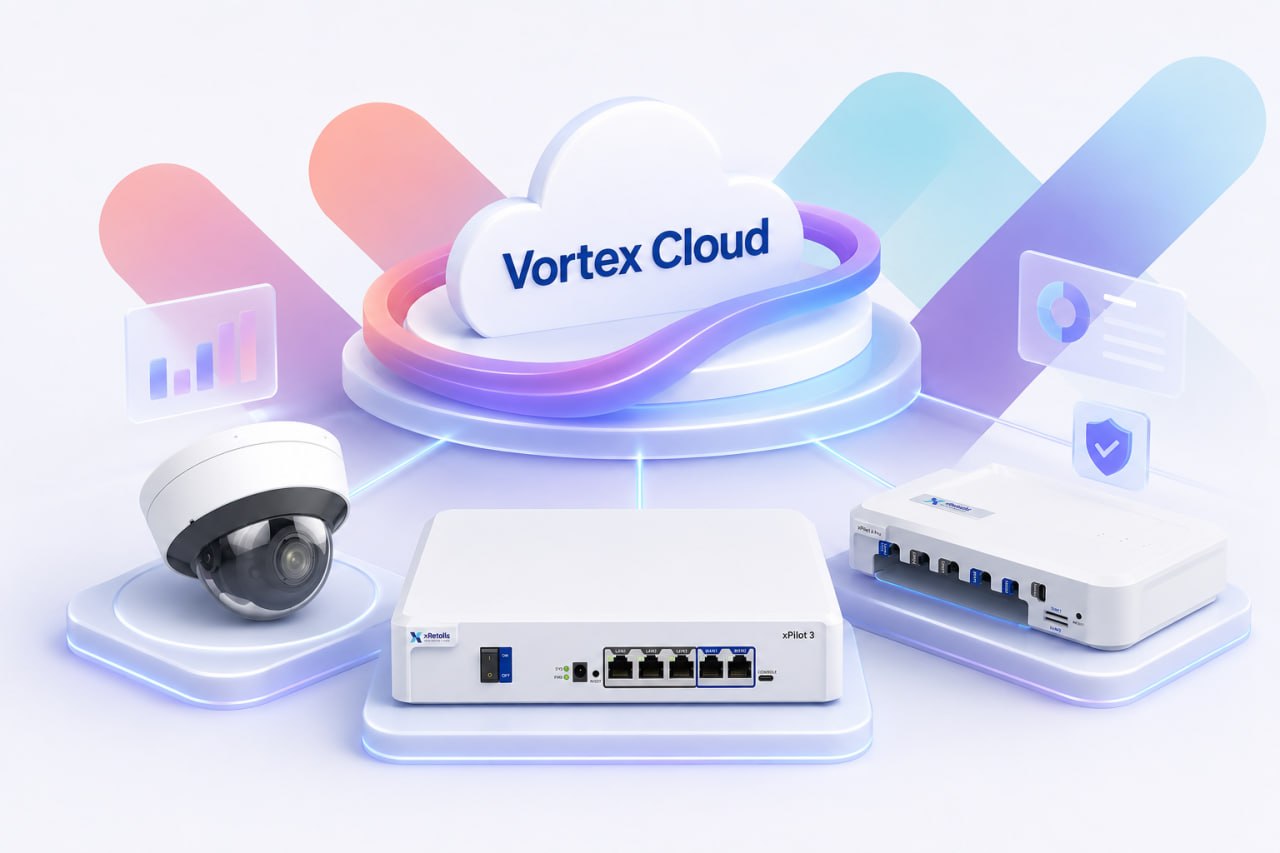
Vortex Cloud Dashboard
Centralized monitoring for all stores — one pane of glass
Learn More →The shift from reactive to proactive management begins with converged gateways and centralised cloud dashboards. A purpose-built retail gateway like xPilot consolidates connectivity — primary broadband, 5G backup with dual-SIM failover, managed switching, and PoE power — into a single ceiling-mounted unit. When the primary line drops, the gateway switches to 5G backup in under three seconds, often before customers notice anything happened.
But connectivity is only half the story. The real transformation comes from the cloud management layer. Instead of waiting for store managers to report problems, IT teams gain a single pane of glass showing every device across every location in real time. Automated inspections run on schedule, anomalies trigger instant alerts, and many issues — firmware updates, configuration changes, even modem reboots — can be resolved remotely without a single truck roll.
Early adopters of this approach report cutting IT ticket volumes by 80%, reducing mean time to resolution from hours to minutes, and slashing on-site maintenance costs by more than 80%. The operational efficiency gain is so significant that some retailers have been able to reduce their central IT headcount while simultaneously improving service levels across every store in their portfolio.
As retail chains expand across borders and device counts multiply, the question is no longer whether centralised IoT management is worth the investment — it is how quickly you can deploy it before your competitors do. The stores that survive and thrive in the next decade will be the ones whose infrastructure works invisibly in the background, letting staff focus on what matters most: the customer.
Related Articles
Continue exploring insights from xRetails


Ready to Transform Your Retail Operations?
Discover how xRetails\' AI-powered IoT management and shopper analytics platforms can help your business reduce costs, increase revenue, and stay ahead of the competition.
Contact Our Team